Leather Tears.
Repaired Invisibly.
A tear in leather doesn’t mean the piece is done. Done right, you won’t know where the damage was. Every repair reinforced from underneath — structure first, surface after. In your home, in one visit.
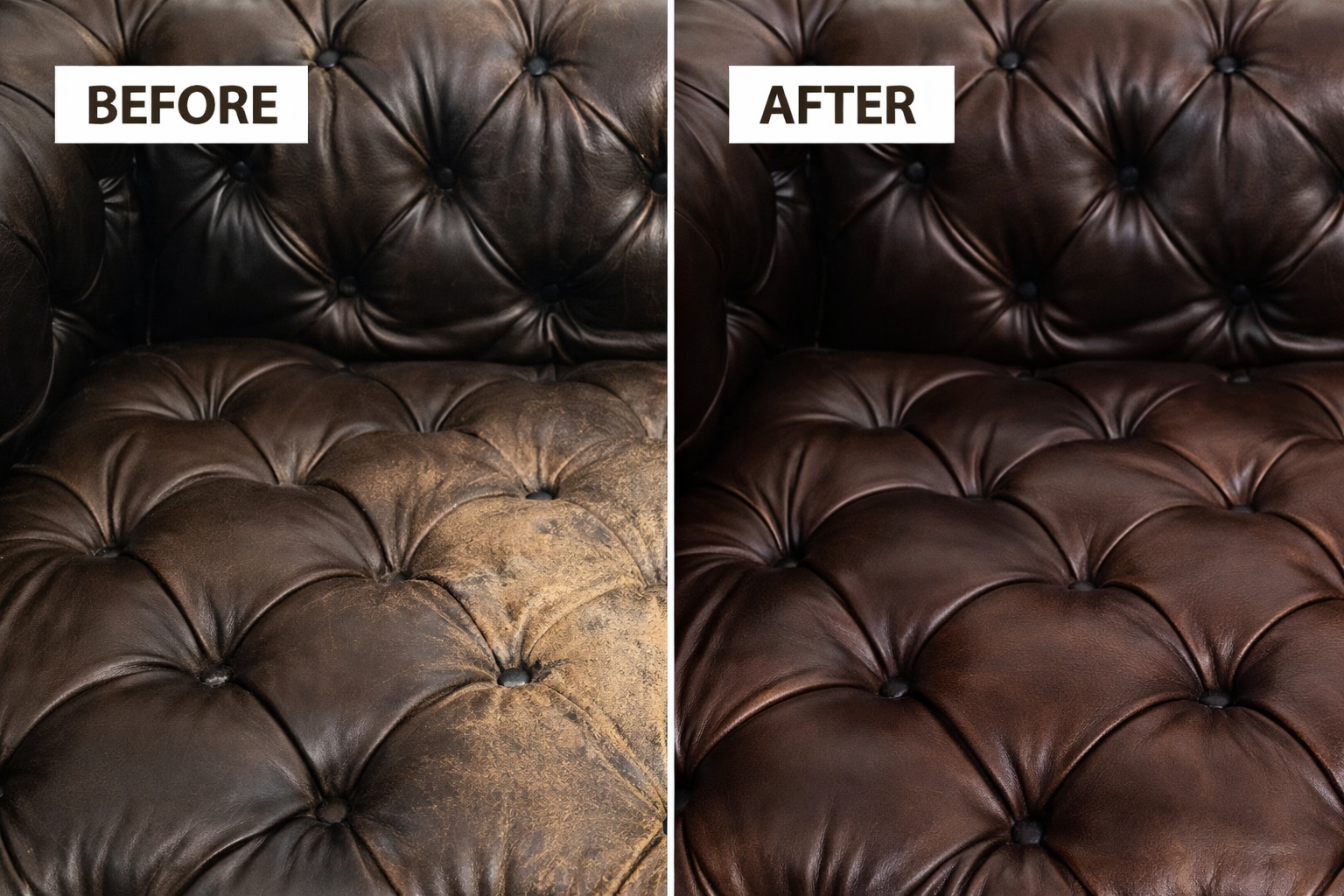
A Tear Is a Structural Problem. Most People Treat It Like a Surface Problem.
When leather tears, the instinct is to patch the surface — apply a repair compound, cover it with color, and move on. That approach fails within months because it ignores the root of the problem. A tear compromises the structural integrity of the hide at that point. Without reinforcing the area from underneath, any surface repair will re-tear under normal use.
The correct approach works from the inside out. The tear is stabilized and reinforced from beneath with a flexible backing material before anything is applied to the surface. Once the structure is restored, the surface can be rebuilt, color-matched, and sealed so the repair is virtually invisible.
Arizona’s climate adds another layer of complexity. Dry leather tears more easily and more severely than conditioned leather — and a tear in dry leather will continue to spread if the surrounding hide isn’t hydrated as part of the repair process. We address the moisture condition of the leather around the tear, not just the tear itself.
Tears, Cracks, Punctures & More
Clean Tears
Sharp, defined tears from keys, scissors, or similar objects. These are the most straightforward to repair invisibly — clean edges hold the backing material well and the surface blends cleanly after color matching.
Stress Tears
Irregular tears from mechanical stress — recliner fold points, seat edges, and areas where the leather is under constant tension. These require flexible repair compound and specific top coat to hold through continued movement.
Pet Scratches & Punctures
Cat claw marks, dog punctures, and chew damage. Depending on depth and spread, these range from surface blending to full structural reinforcement. The Leather Audit™ determines the right approach for each piece.
Peeling & Delamination
Bonded leather and some top-grain leathers develop peeling where the surface layer separates from the backing. We assess whether repair is viable or whether a full color restoration approach is more appropriate.
Deep Cracks
Cracks that penetrate through the surface into the hide — caused by severe dryness in Arizona’s climate. These require conditioning the leather, filling the crack from within, and rebuilding the surface before color is applied.
Seam Separation
Seams that have opened along stitching lines. Restitched or bonded depending on the seam type, then color-blended so the repair is invisible. Seam repairs prevent the separation from spreading to the surrounding leather panel.
Structure First. Surface After. Seal Always.
Every leather tear repair follows The Resurrection Process™ — built from the inside out, sealed on every job.
The Audit
We assess the tear type, depth, and spread. We check the surrounding leather condition — a dry hide around a tear will re-tear. We tell you exactly what’s possible before any commitment is made.
The Repair
Flexible backing material applied beneath the tear to reinforce the structure. The tear edges are bonded and stabilized. The surrounding leather is conditioned to prevent the spread. Structure before surface — every time.
The Surface
Repair compound applied in thin layers over the reinforced area — built up gradually to match the texture and level of the surrounding leather. Hand-textured to match the grain pattern of your specific hide.
The Color
Hand-mixed pigments matched to your leather’s original tone applied over the repaired surface. Manufacturing-grade colorants blended by eye for depth and variation that matches the surrounding leather naturally.
The Seal
Professional-grade protective top coat applied over the entire repaired area. Flexible enough to move with the leather, UV-resistant, and durable. The seal that makes the repair hold in Arizona’s climate.
Dry Leather Tears Deeper and Spreads Faster
In a humid climate, a tear in leather tends to stay contained. The surrounding hide has enough moisture and flexibility to absorb the stress without propagating the damage further.
In Arizona’s single-digit humidity environment, the leather around a tear is already dry and brittle. That means a tear that might stay contained for months in a humid climate will spread significantly faster here — especially in summer when the heat and low humidity are at their most aggressive.
Every tear repair we perform in Arizona includes conditioning the surrounding leather — not just treating the tear itself. A repair that doesn’t address the dryness of the adjacent hide is a repair that will need to be redone sooner than it should.
Why Consumer Tear Repair Kits Fail in Arizona
Consumer leather repair kits are designed for mild climates and low-stress applications. In Arizona, they fail for three reasons.
No backing reinforcement. Kits apply compound to the surface only — they don’t address the structural weakness beneath the tear. Under normal use, the repair re-tears.
Inflexible compound. Consumer repair compounds dry rigid. In Arizona’s heat, rigid compounds contract and expand differently than the leather hide, causing the repair to crack and lift within weeks.
Color mismatch. Pre-mixed kit colors never match aged leather accurately. The repair stands out more than the original tear in most cases.
11 Years. Structure First. Every Time.
The difference between a tear repair that lasts and one that fails within months comes down to whether the structure was addressed before the surface. We’ve been doing this correctly in Arizona’s climate for 11 years.
- Flexible backing reinforcement beneath every tear — structure before surface
- Surrounding leather conditioned to prevent spread in Arizona’s dry climate
- Hand-textured surface compound matched to your leather’s grain pattern
- Hand-mixed colorants matched by eye to the original tone
- Professional flexible top coat — holds through movement and Arizona heat
- In-home service — the piece never leaves your home
- Test area approval — you see the result before we continue
- You’ll Love It or You Don’t Pay — guaranteed
- BBB A+ rated · 4.8★ · 11 years serving Maricopa County
- Free Leather Audit™ — honest assessment before any commitment
“Worth every penny. You can tell they love what they do. It’s rare to see this kind of craftsmanship today.”
— Howard K., Paradise Valley
“You’ll Love It or You Don’t Pay.”
We show you the result before we’re done. If the repair isn’t invisible to your satisfaction, we keep working until it is — or you pay nothing. 11 years. No exceptions.
Schedule Your Free Leather Audit™The Leather Audit™ Is Where It Starts.
We come to your home, assess the tear, and tell you exactly what can be achieved — and what it will cost. No pressure, no obligation.
We’ll follow up within 24 hours to schedule.